|
|
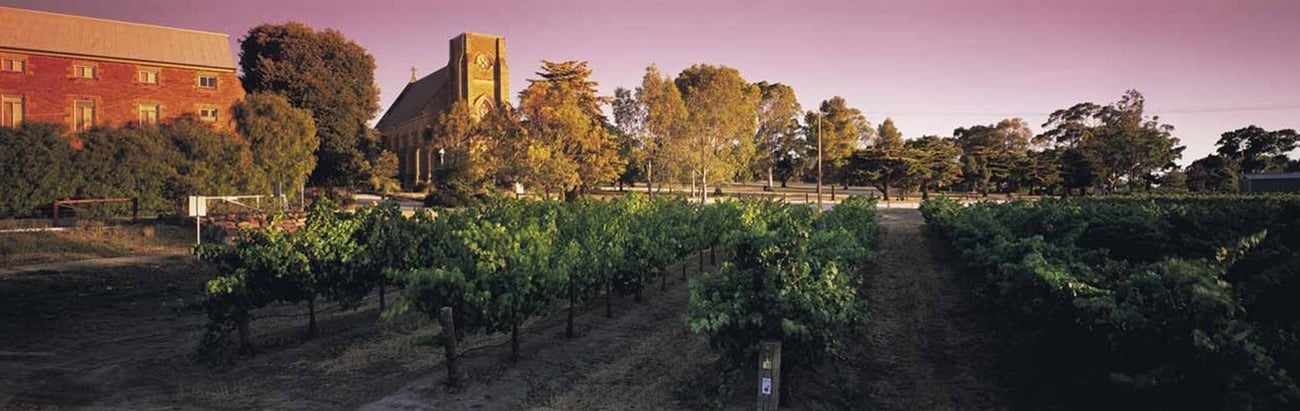 |
Sevenhill, SA |
|
|
Greetings From The Arrupe Coordinator |
|
Having just returned from our annual 8-day silent retreat (this year held at Sevenhill in South Australia), we have now settled in to a series of lectures given by Rob McChesney SJ, the author of The Soul Also Keeps the Score – A Trauma-informed Companion to the Spiritual Exercises of St. Ignatius. This series is being held in conjunction with JISA and it is wonderful to see so many Australian spiritual directors in attendance. We are also continuing our weekly work together with guest speakers and praxis experiences. Most of our students are also studying at ACU and a number of others are taking people through the Spiritual Exercises for the first time (under supervision). We are also already interviewing and planning for next year's Arrupe intake. So, lots happening.
One of the many great privileges of my role is that I am reminded on a daily basis of the importance and value of Ignatian spiritual direction. To be part of a learning community where formation in Ignatian spiritual direction and the giving and receiving of the Spiritual Exercises is the core focus is uplifting and consoling for all involved. This may appear to be somewhat of a contrast to the contents of this newsletter; however, all spiritual directors are called to negotiate, and reckon with the times in which they live. We certainly live in challenging times - but so did every generation that has gone before us.
All the podcasts, articles and books sited in this newsletter are challenging in that they name with great integrity, intelligence, and insight the times in which we find ourselves now. But all these podcasts, articles and books are full of hope precisely for this reason. For to name reality truthfully is an exercise in hope.
So, reader, I hope you touch hope by engaging with some of what you find here. |
|
|
|
Every good wish,
Micheál Loughanne
Arrupe Coordinator |
|
|
|
|
|
|
Where we find ourselves: what is the call? |
|
“It is possible to suffer with dignity and without. I mean: most of us in the West don’t understand the art of suffering and experience a thousand fears instead. We cease to be alive, being full of fear, bitterness, hatred, and despair. God knows, it’s only too easy to understand why. But when we are deprived of our lives, are we really deprived of very much? We have to accept death as part of life, even the most horrible of deaths. And don’t we live an entire life each one of our days, and does it really matter if we live a few days more or less? ... I am with the hungry, with the illtreated and the dying, every day, but I am also with the jasmine and with that piece of sky beyond my window; there is room for everything in a single life. For belief in God and for a miserable end. When I say, I have come to terms with life, I don’t mean I have lost hope. What I feel is not hopelessness, far from it. I have lived this life a thousand times over already, and I have died a thousand deaths. ... Suffering has always been with us, does it really matter in what form it comes? All that matters is how we bear it and how we fit it into our lives. ... I sometimes bow my head under the great burden that weighs down on me, but even as I bow my head I also feel the need, almost mechanically, to fold my hands. And so I can sit for hours and know everything and bear everything and grow stronger in the bearing of it, and at the same time feel sure that life is beautiful and worth living and meaningful. Despite everything. But that does not mean I am always filled with joy and exaltation. I am often dog-tired after standing about in queues, but I know that this too is part of life, and somewhere there is something inside me that will never desert me again.”
(From An Interrupted Life by Etty Hillesum) |
|
This is a short excerpt from the diary of the extraordinary Jewish mystic Etty Hillesum. The more I read and contemplate her diary, the more I feel she is a prophet for our time. Lest I sound too dramatic, (for I don't wish to compare the sheer extremity of the historical moment she lived through with our present one), there is much in her experience that can speak to ours.
Sure, no-one in Australia is being dragged off to concentration camps to be starved or executed, nonetheless, there is a growing authoritarianism and fear-based polarisation taking place, not just in Australia, but all over the world. And we know from history where that can ultimately lead, if we don't do our utmost to counter it.
What I love most about Hllesum's writing is the way in which she moves towards the horrors that are happening about her and immerses herself with the victims of this horror. She insists on expressing her solidarity with them by experiencing what they are experiencing. At one and the same time, however, she is able to celebrate everything good that is happening around her; even the sight of a rose or a patch of blue sky fills her with hope and consolation. The horrors that are being inflicted on her and her people do not define her, and do not blind her to the beauty of the world.
This is an extraordinary gift to her (and now to us). It is as though God graced her with her very own heart, right in the midst of one of the cruellest chapters in the history of humankind. If she could bring that level of compassion, wisdom and forgiveness to her context and time, maybe we could too in ours? |
|
|
|
|
|
|
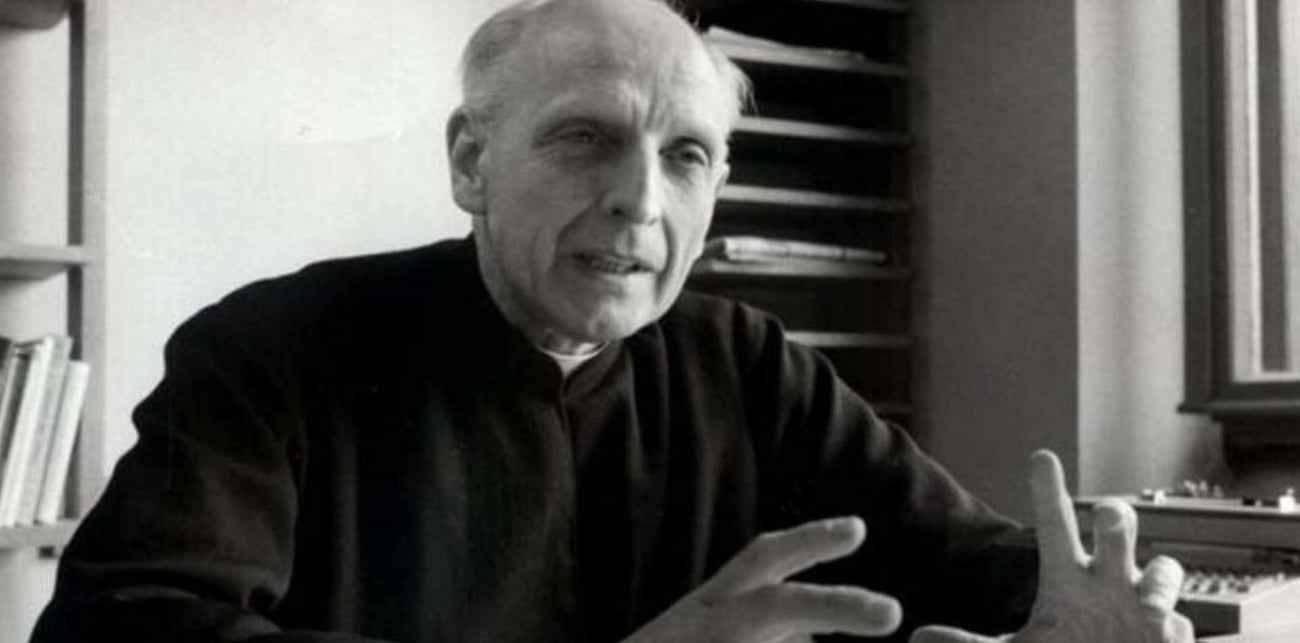
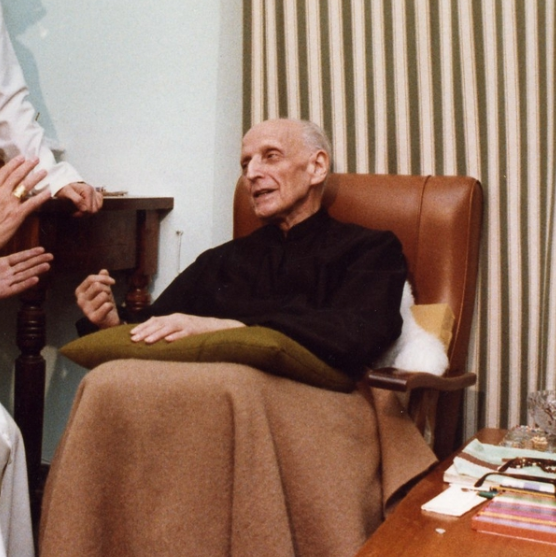
Pedro Arrupe SJ – His words, His Vision |
|
Excerpts from: (From Chapter 18 “Rooted and Grounded in Love” in One Jesuit’s Spiritual Journey) |
|
"It is not at all surprising, therefore, that charity is a constant point of reference in Ignatius's spiritual teaching. I shall say nothing here of charity as a spiritual option, such as it is presented in the Exercises or institutionalized in the Constitutions. But I must refer, even if only in passing, to the place occupied by charity in Ignatius' letters.
In the letters addressed to his relatives in Loyola or to his benefactors in Barcelona, to his protectors or simply to those whom he directed spiritually – persons of great rank or of lowly condition – to the Jesuits scattered over Europe or Asia, in all these letters a prominent place is repeatedly given to almsgiving, visits to hospitals and prisons, assistance to those in need.
This type of recommendation is, of course, never missing in the instructions with which Ignatius sends someone on a 'mission' – be that to Trent, Germany, England, or Sicily – or for the founding of houses or of colleges. Indeed, it would seem that for Ignatius no ministry or service, be it ever so spiritual in itself, could be deemed complete were it not complemented by the charitable works of material assistance. And vice versa.
For it is clear that, for Ignatius, the true exercise of love for one's fellowmen is apostolic zeal, the ardent desire to procure his salvation and perfection; but it is no less evident that Ignatius loves man whole and entire, as did the Lord for whose sake alone he loves." |
|
|
|
|
|
|
|
|
Do you feel a calling to become a Giver of the Spiritual Exercises of St Ignatius? If you do, consider joining us in the Arrupe Program in 2027. |
|
We are accepting applications for 2027. We will hold an information evening on Monday, September the 28th from 7 pm- 8:30pm (AEST).
If you feel you have a calling to become a giver of the Spiritual Exercises of St Ignatius, we would love to have you come along to our information evening (via zoom). You can contact me by email (below). We welcome those who have qualifications and experience in Spiritual Direction and those who do not.
Details of our program can be viewed on our website.
I can be contacted directly at michael.loughnane@arrupe.org.au. |
|
|
ACU Spiritual Direction |
|
The Arrupe Program is separate from but collaborates closely with the Spiritual Direction course at ACU. Most of our candidates study at ACU as part of their formation to become givers of the Spiritual Exercises. |
 |
Would you like to study spiritual direction at the Australian Catholic University? |
|
Develop knowledge, understanding and the foundational skills suited to the ethical, self-aware and safe practice of spiritual direction in the Ignatian tradition by enrolling in the Graduate Diploma in Spiritual Direction, or, the Master of Spiritual Direction. |
|
|
|
|
|
|
|
Philosopher Simone Weil’s guide to paying attention
(Soul Search on Radio National)
“Many of us … are facing our own kind of authoritarianism and wondering, … what is it that we should be doing? Are we supposed to be picking up guns? Are we supposed to be just teaching? … If that's the world now, wind back a hundred years when war and fascism were rampant in Europe. A brilliant young French woman wrestled with the question of how to live a moral life, and she gave us a remarkable vision of how to pay attention. There are so few people, including philosophers, thinkers, that live exactly what they wrote about and what they were thinking about. Who had that level of integrity? This is a person who's really living what she thinks. I mean, she's embodying this level of attentiveness unto her death. That's hard to ignore. And I think she can provide us a kind of direction to go in, even if we're not able to be Simone Weil. …” |
|
|
|
We’re all stressed. What should we do about it?
(All in the Mind on Radio National)
"Time and time again, Dr Rangan Chatterjee has seen chronic stress wreak havoc on his patients' lives — contributing to autoimmune disorders, gut problems, low libido and more.
But the most devastating blow struck his own family, when his father's punishing work schedule forced him to medically retire in his 50s. It’s an experience that led Rangan to rethink his own work and approach to medicine.
Today, Dr Chatterjee, a GP and host of a mega popular wellbeing podcast, shares his story, as well as strategies for better managing stress in your own life." |
|
|
|
Angertainment
(Big Ideas on Radio National)
“The things that get attention on social media are generally harmful to society. They are things that are generally not true, that incite us to hate each other, that divide and polarise us politically, that are really bad for our mental health, that are driving young men into really dark, misogynistic places. You know, these are all the results of a platform or platforms that choose to elevate the wrong things. … The problem with this, when you start polarising people and then they go off into their sort of camps and start hating each other, one of the worst things about polarisation in society is that ultimately it can lead to violence…" |
|
|
|
Reframing Self and Society in a World on Fire
(Jung in the World)
“I feel as if it's escalating in part because of how we receive our news or how saturated we are by the news, particularly those who pay a lot of attention to social media. And I tend to think it's more than we can, or our patients can metabolize most of the time, especially in light of the fact that there's, there are limited actions we can take in response to what we're taking in, right? Whether it's about how the election cycle is spinning out or about war in Gaza. … we see more, we take in more than the psyche is able to digest. … This is more intense, perhaps because of climate change and perhaps because of technology. … I also think that the kinds of affects, particularly that we're talking about here, tend to have a contagion. … For example, anxiety of the kinds that an anxiety about one's existence, existential anxiety, anxiety about politics, and sometimes people think we shouldn't get worked up about politics. I mean, politics is one of the things we ought to get worked up about, because it's about how we live collectively together. So it always includes a certain amount of anxiety and a certain amount of anger. … I do think that the addition of social media and 24-hour media of some kind, I think all of those things do intensify it … these media are very good at continuing the contagion.” |
|
|
|
|
|
|
The Future
By Wendell Berry |
|
|
|
For God's sake, be done
with this jabber of "a better world."
What blasphemy! No "futuristic"
twit or child thereof ever
in embodied light will see
a better world than this.
Do something! Go cut the weeds
beside the oblivious road. Pick up
the cans and bottles, old tires,
and dead predictions. No future
can be stuffed into this presence
except by being dead. The day is
clear and bright, and overhead
the sun not yet half finished
with his daily praise. |
|
|
|
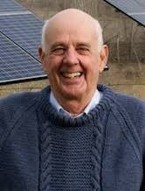
I love Wendell Berry, the poet and the man. His is a genuinely prophetic voice (he is now 92 and still does all his writing by hand). His poetry is accessible, direct, and often imbued with an undertow of irony and suspicion of contemporary utopian hype. We have been hearing promises of “a better world” for quite some time. Now the promises are intensifying with the promotion of AI – the new wonder drug, the new panacea for all our ills (at least that’s the rhetoric of the tech bros). Berry reminds us that the best possible world is right now in this present moment. He invites us to live here, in the natural world, right now. |
|
|
|
|
|
|
|
Some Political and Cultural Implications of The Spiritual Exercises
By James Hanvey SJ
“My aim here is twofold: to explore how the Spiritual Exercises are significant for our social and cultural agency and can serve as a basis for judging political and cultural systems; and also to suggest that we do the Exercises a disservice if we confine them purely to the growth of an individual spiritual subject. They certainly are intended for conversion and the development of spiritual freedom, but they also intend that this freedom be placed at the disposal of God’s salvific purpose. In so far as the Exercises always direct us to an encounter with a God ‘working in all things’, they do not allow us to flee from the world. Rather, they encourage us to become active apostles of Christ and his Kingdom within it. The Exercises do not propose any particular political or social system, but offer us a way of discerning the principles and values that should guide our actions and the means that best serve us and our neighbour to attain our ends. …” |
|
|
|
The intolerance of absolute certainty
By Juliette Hughes
“‘I beseech you, in the bowels of Christ, think it possible you may be mistaken.’
(Oliver Cromwell, 3 August 1650, letter to the General Assembly of the Church of Scotland)
Even in the midst of civil and religious war, Cromwell made a passionate appeal for humility: but sincere conviction does not guarantee correctness or even goodness. The same man presumably did not think himself ‘mistaken’ when he ordered the brutal sieges at Drogheda and Wexford that killed thousands, including many civilians. History is littered with the bodies of those killed by leaders who were utterly convinced of their own righteousness. Think of Stalin, of whom historian Robert Conquest wrote the limerick above. Think of Robespierre, Mao, Pol Pot. All of these were utterly convinced of their own righteous correctness. … Thinking you are right does not guarantee that you are right. Neither does it guarantee that, even if you are right, you are good or decent and trustworthy – rather than inclined to murder those who disagree. … So, yes, I am worried that an age of intolerance is upon us." |
|
|
|
Experiments in hope: What can Christianity offer in these polarised times?
By Michael Jensen (26 May 2026)
“Ultimately, our fractured public square cannot be healed by better political management or procedural agreements; earthly politics are simply not enough to unite a people with no shared moral horizons. The project of Babel — attempting unity without God — has only left us more isolated, sorted and addicted to our own self-righteous outrage.
But the church is called to something far more beautiful. We are not called to retreat behind walls, nor are we called to morph into just another progressive or conservative club. Instead, we are invited to step into the laboratory. By running these messy, imperfect experiments in resistance, harmony, proximity and radical welcome, we offer our bodies as living sacrifices.
In doing so, we can become a community of witness, a living social prototype capable of sustaining hope, generating love and offering the profound mercy of Jesus Christ to a world that so desperately needs it.” |
|
|
|
|
|
Magnifica Humanitas
By Pope Leo XIV
“Living out justice in the Church means purifying ecclesial relationships and structures from distortions that give rise to inequality, lack of transparency and abuse of power. In this regard, listening to the victims of spiritual, economic, institutional, sexual and power-based abuse, as well as abuses of conscience, is an integral part of a journey toward justice, which includes acknowledging the harm done, just reparation and taking steps to prevent it from happening again. Every power is at the service of communion and mission. All authority is at the service of the People of God. This ministry of service is expressed not only through our faith celebrated and lived in the Sacraments, and in the adoption of a synodal style, but also in the concrete sharing of goods. Following the example of the early Church, ecclesial resources need to be shared so that no one among us may be in need (cf. Acts 4:34), and so that their administration may support the mission of proclaiming the Gospel to the poorest. Regular assessments of the exercise of ministerial responsibilities should be encouraged, not as judgments on individuals, but as tools for learning and correction oriented toward mission.
Only to the extent that we are open to the action of the Holy Spirit will these principles of Social Doctrine become incarnate in ecclesial life. In this way, the Church will be able to bear credible witness to society that seeking the common good together, with shared responsibility and fraternity, is not a utopia, but a real possibility." (No.89) |
|
|
|
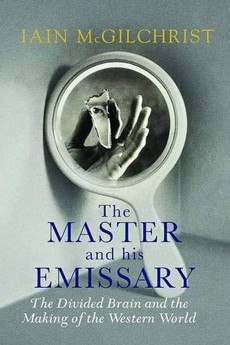
The Master and his Emissary
By Iain McGilchrist
“The world of the left hemisphere, dependent on denotative language and abstraction, yields clarity and power to manipulate things that are known, fixed, static, isolated, decontextualised, explicit, disembodied, general in nature, but ultimately lifeless. The right hemisphere, by contrast, yields a world of individual, changing, evolving, interconnected, implicit, incarnate, living beings within the context of the lived world, but in the nature of things never fully graspable, always imperfectly known - and to this world it exists in a relationship of care.” |
|
|
|
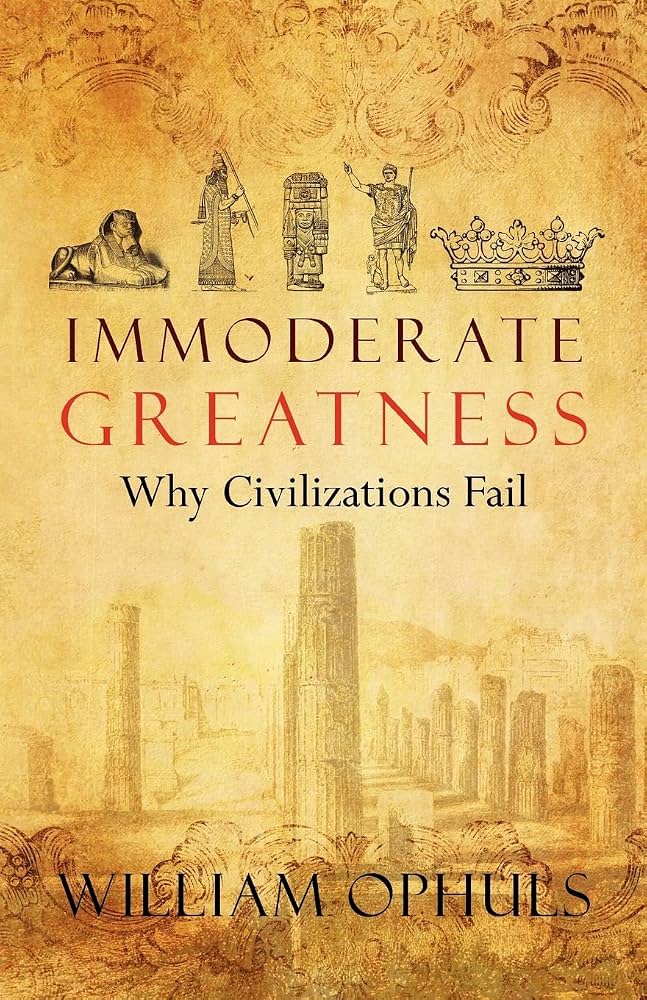
Immoderate Greatness: Why Civilizations Fail
By William Ophuls
“In essence, immoderate greatness exemplifies what the ancient Greeks would have called hubris: “overbearing pride or presumption.” Civilization is Homo sapiens’s bold attempt to rise above the natural state in which the species lived for almost all of its two hundred thousand years on Earth. Unfortunately, by its very nature, this effort to become greater encounters four implacable biophysical limits. It also sets in motion a seemingly inexorable moral and practical progression from original vigor and virtue to terminal lethargy and decadence. In other words, we can dissect hubris into its component parts and thereby specify the concrete structure of civilized man’s ingrained presumption. Nevertheless, when we have done so, we shall find that the Greek answer is essentially correct. Those afflicted by hubris become the agents of their own destruction. Like a tragic hero, a civilization comes to a ruinous end due to intrinsic flaws that are the shadow side of its very virtues….” |
|
|
|
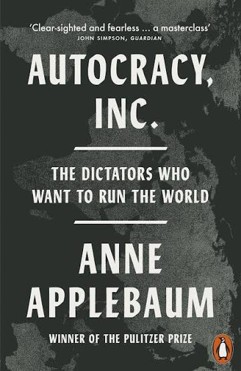
Autocracy, Inc.
By Anne Applebaum
“Modern autocrats differ in many ways from their twentieth-century predecessors. But the heirs, successors, and imitators of these older leaders and thinkers, however varied their ideologies, do have a common enemy. That enemy is us. To be more precise, that enemy is the democratic world, “the West,” NATO, the European Union, their own, internal democratic opponents, and the liberal ideas that inspire all of them. These include the notion that the law is a neutral force, not subject to the whims of politics; that courts and judges should be independent; that political opposition is legitimate; that the rights to speech and assembly can be guaranteed; and that there can be independent journalists and writers and thinkers who are capable of being critical of the ruling party or leader while at the same time remaining loyal to the state. Autocrats hate these principles because they threaten their power. If judges and juries are independent, then they can hold rulers to account. If there is a genuinely free press, journalists can expose high-level theft and corruption. If the political system empowers citizens to influence the government, then citizens can eventually change the regime.” |
|
|
|
|
|
|
 |
Ignatian Silent Retreats |
|
Individual guided residential retreats from 2 to 8 days, at beautiful locations nationally. Our silent retreats offer time away from the daily noise with a quiet still space to rest, reflect, and listen deeply to God’s presence within. Whether you are new to or familiar with Ignatian spirituality, you are welcome.
|
| EXPLORE |
|
|
 |
Weekly Prayers for Season of Creation |
|
Journey through Living Water this Season of Creation with Ignatian prayers inspired by Ezekiel 47:9,12 Everything will live where the river goes … their leaves for healing.
Beginning Thursday 3 September, a prayer will be delivered to your inbox each week throughout September. With scripture, silence, imagination and reflection, explore images of wells, rain, rivers, wetlands and desert springs as pathways into ecological awareness, spiritual renewal and hope.
Created by JISA’s Being with God in Nature ministry, these prayers can be received wherever you are, whether you are new to Ignatian spirituality or continuing a lifelong journey.
There is no charge for these prayers, you are invited to make an optional financial gift to the ministry when registering. Thank you.
Free weekly email series | Starts Thursday 3 September 2026 |
| EXPLORE |
|
|
 |
Spring Tasters for your soul |
|
Let us know, let us press on to know the Lord; his appearing is as sure as the dawn; he will come to us like the showers, like the spring rains that water the earth. Hosea 6:3
You are warmly invited to three Spring Tasters, evenings to slow down and savour the gifts of the spring season through prayer, personal reflection, and meaningful spiritual conversation.
We look forward to welcoming you to notice where the Spirit is bringing new life, and discover anew God's invitation to hope, life, and transformation.
Bought to you by JISA’s First Spiritual Exercises Ministry, and Michael Hansen SJ.
Dates: September 8, 9 and 10 (Attend one, two, or all three sessions)
Time: 6.30-7.45pm |
| EXPLORE |
|
|
 |
What is God asking of me? Discernment Retreat Days - Kew VIC |
|
If you ever wonder what God may be asking of you? Come and join us as we explore ways of discerning the voice of God speaking to us at the core of our being. These two retreat days include praying with scripture, imaginative contemplation, sacred conversation, and other spiritual exercises taught to us by St Ignatius.
Saturday 26th and Sunday 27th September 9.30am – 4pm. |
| EXPLORE |
|
|
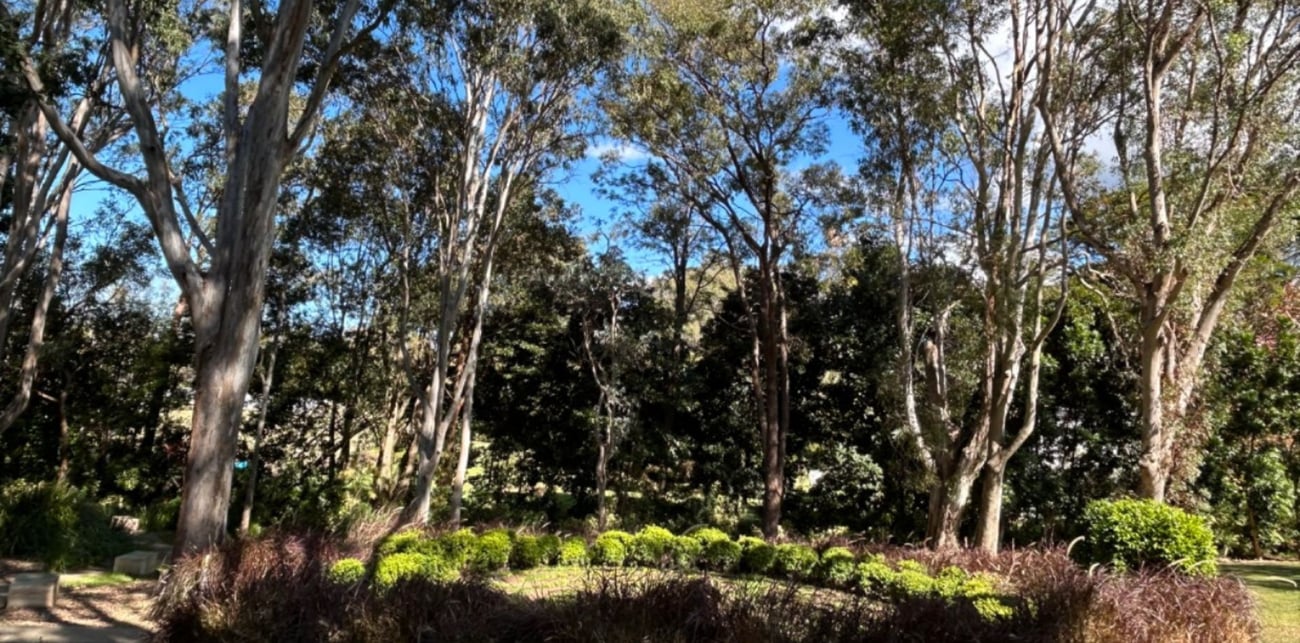 |
Eco Spirituality Retreat, 5 Days - Brisbane QLD |
Come away to be renewed and inspired by God’s beautiful creation.
Reflect on our world and to walk the path of environmental conversion. Join us in the natural beauty of Santa Teresa Spirituality Centre, and take a day trip to Minjerribah North Stradbroke Island, during the retreat (weather permitting).
Sunday 4 October 4pm - Friday 9 October 2pm
BOOKINGS CLOSE 4 SEP |
| EXPLORE |
|
|
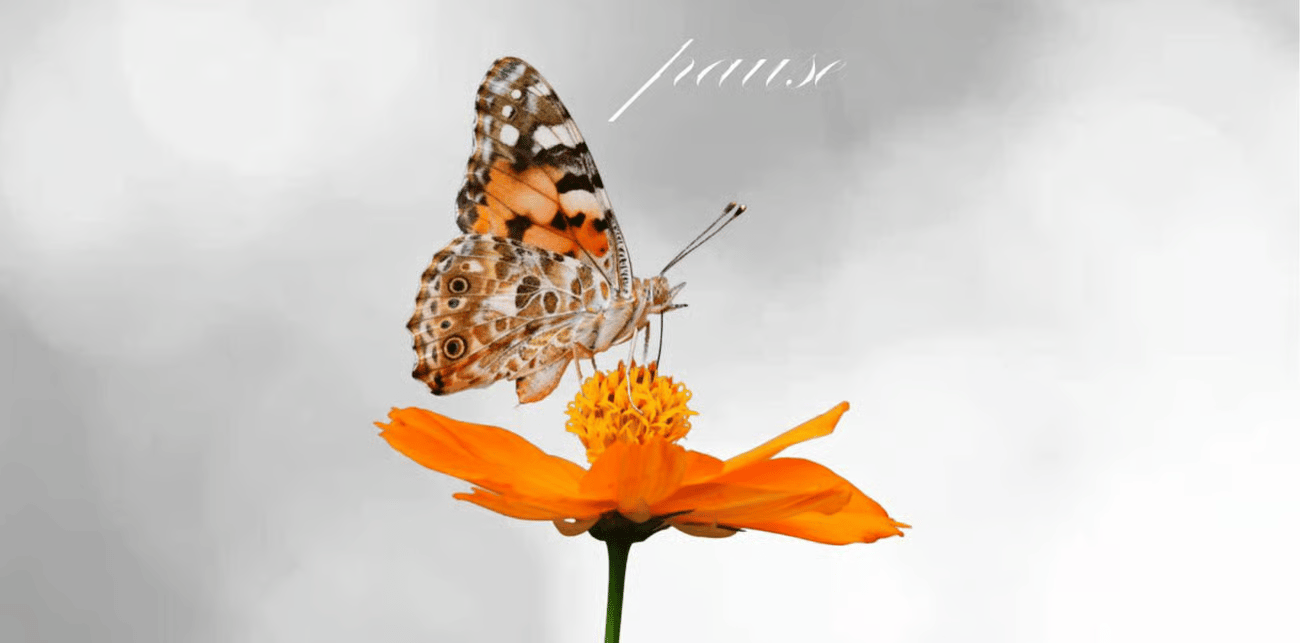 |
Pause - A Retreat for Women in Sydney |
|
A small group retreat for women who seek a time of prayer, guidance, and stillness amidst the natural transitions of life to come and rest, and discover the emerging call of transformation and flourishing that God is inviting you to, God’s love, wisdom and wish for you.
"With generous time for silence and solitude and daily one-on-one spiritual direction, the retreat was truly restorative. I would highly recommend this to any woman looking to slow down, breathe deeply, and pause from their daily life."
- Retreatant
This popular 3-day weekend retreat is now being offered in Melbourne and Sydney in October. It is a three-day long weekend retreat with full accommodation and meals, retreat facilitation, prayer, take-home resources, and daily one-on-one spiritual accompaniment.
We look forward to welcoming you.
Sydney in October: Friday 23rd 10am – Sunday 25th 4pm
|
|
|
|
|
|
|
|
“Grant me O God to relish the things that are yours, and to communicate them to others”.
- Pedro Arrupe SJ |
|
|
|
|
|
|
|
|
|
|